Staging the Future: Strategy 4.0
The presentation as extreme sport.
Eight weeks of preparation for a single day. Multiple rehearsals. Countless sleepless nights. Two days of denial. One day of pure panic.
The first problem appeared the moment the ten-person delegation from headquarters marched in: the "big" conference room wasn't big enough. So the local Finance Chief dialed in via Teams instead. The microphone crackled. Nobody understood him. Nobody noticed. Symbolism that spoke for itself.
The Chairman immediately launched into Disruption, without anyone quite knowing what he meant by it. The Finance Chief asked questions that sounded like ChatGPT had crossed a TED Talk with a horoscope. The Tech Chief held forth on "data-driven resilience architectures," which sounded like an accidental patent filing. Nobody asked for clarification.
The unit's directors tried to salvage the situation. They rolled out their image film: epic music, gleaming factory floors, all very emotional. The Operations Director got briefly sentimental, knowing full well the video had cost more than the last ERP upgrade.
Then: 87 slides. Glossy visuals, visions, buzzwords. Plenty of sparkle, little substance. Everyone nods, even though nobody understood what the strategy actually was. Questions like "Why does our core business still run on a 2017 spreadsheet?" or "Why is Password123 still allowed?" were, naturally, not asked.
"Are we ready for the quantum leap?" The word "scalability" came up fourteen times. "Speedboat" seven.

The grand finale: the Finance Chief, in a hoodie, whipped out his phone. Group selfie. Three filters. Two hashtags. He asked the room: "Where do you see yourself in five years?" The answers? Social-media-ready. 47 likes in three minutes, 41 of them from internal accounts.
Applause. Handshakes. "Great energy." "Impressive setup." "We should do this more often."
On the flight home, the Chairman said to his assistant, quietly, almost in passing: "Nice folks. But I was missing the depth."
Password123 kept right on running on Server 4. The destination marked "Transformation" was never actually reached. The plane landed on time. Everyone clapped.
Fireside Chat
No fire. No conversation.
The invitation sounded promising: "Fireside chat with our Division Chairman – open, informal, inspiring." Next to it, a photo of the Chairman – more yearbook than present day.

Colleagues were looking forward to an informal conversation. Or at least a fireplace. Neither materialized. Cafeteria, 10:00 a.m. Rows of chairs in perfect alignment. A microphone on the table. Still water. The lighting: more dental office than campfire. "I thought this would be… more firesidey." – "I thought there'd be croissants."
Then he entered the room. The Chairman – in full Silicon Valley standard issue: trendy vest, neon socks, immaculate white sneakers. A smile somewhere between vision and venture capital. He opened with a joke only he understood.
The site director gave a brief introduction. Then the Chairman began: "It's important to me that we speak openly and as equals today." What followed was not a conversation, but a monologue.
Terms, delivered with the conviction that repetition eventually replaces reality. Disruption. Trust. Accountability. People centricity. "Trust means setting clear expectations."
Minute 22: "I want you to experience me as a person, too." What followed were glimpses: 4:30 a.m. routines. Triathlon training. Sundays with no replies, but plenty of flagged emails.
Then: Q&A. "Any questions?" Silence. Eventually, a colleague from Communications cautiously raised a hand. The look of a man briefly reassessing his career.
Question: "What was your biggest personal learning curve this past year?" Pause.
Answer: "I've learned that employees don't need to be motivated, just managed." Silence.
Someone coughs. Someone googles "empathetic leadership."
"I hope you got to know me a little better today." He nods. Stands up. Leaves.
Three people clap. Politely. The rest look around. Still searching for the fire. Or the conversation.
Later, on Slack:
"Fireside chat: 1 star. Missing the fire."

English Enterprise Edition™
Teams Meeting: Where the Friendly Invasion Begins
Welcome to the modern international workplace – where English isn't learned, it's hijacked. English today is a forked open-source software project running on entirely new logic. Rebranded and relaunched. The language now operates as: English Enterprise Edition™.
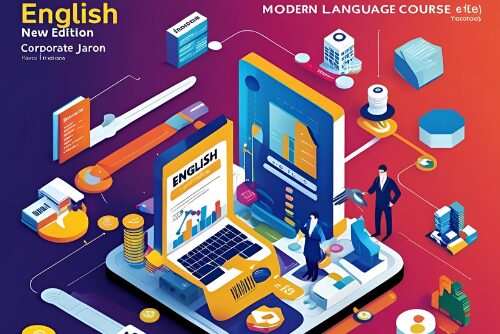
Forget Paris. Forget Tokyo. The real culture shock begins in a Microsoft Teams call with a certain Leon, who won't stop talking about "syncing the backlog."
Words get blended into a linguistic smoothie – a mix of directness, efficiency, and generous jargon garnish. A linguistic fly-by-wire system where nobody's actually holding the stick anymore. And if a word's missing? Just invent one.
"We need a kick-off." (Nobody is kicking anything.) "Let's do a quick coffee breakout session." (That's... just coffee.) "That's not in my scope." (I don't want to do it.)
The result is a bold new dialect that is, to put it mildly, terrifying for native speakers. They're the only ones on the call who don't understand a word: "Let's define a roadmap." — Where are we driving to? … Ah. Right. An action plan.
Someone says: "Let's forward the deck before the next deep dive," and they nod bravely, clutching their notepads as if these could somehow protect them from the crash.
Secretly, they keep lists of these gloriously over-engineered sentences to share with friends after work as "Black Box Records": "Let's circle back for a cross-functional prognosis calibration session to validate the strategic relevance of our mid-term KPIs against the overarching transformation roadmap."
The expression on a Brit's face in the call says it all: Is this still a language, or already an operating system?
English is no longer a language. It's a platform. A system update has been installed, PowerPoint transitions have been added, and onboarding is now running for the rest of the world.
So the next time someone asks whether you're "aligned on the learnings from the last touchpoint" – just say yes. Nod. Smile.
It won't help you understand the radio transmission. But you'll survive the landing.